
Is your business already exposed? See it in seconds.
Attackers scan every domain on the internet, every day — including yours. Enter your domain and see a live snapshot of what they can see: spoofable email, certificate problems, missing protections.

Run your free exposure check
Passive checks only — we look at what is already public. Nothing is attacked, nothing is logged into.
Resolving domain…
Small business is the storm's favourite target
of all cyberattacks target small businesses — most owners believe they're too small to matter.
Accenture, Cost of Cybercrime studylost to fake-invoice email scams in a single year. It starts with a spoofed company email address.
FBI Internet Crime Reportbreaches start with a simple email to an employee — not with sophisticated hacking.
Industry breach research (Verizon DBIR)of small businesses hit by a serious attack close their doors within six months.
U.S. National Cyber Security AllianceThe check above takes 30 seconds. Knowing beats hoping.
Common ways businesses get attacked
These are the attacks that hit businesses most often. None of them require sophisticated hacking — and every one of them leaves traces that can be spotted before it happens.
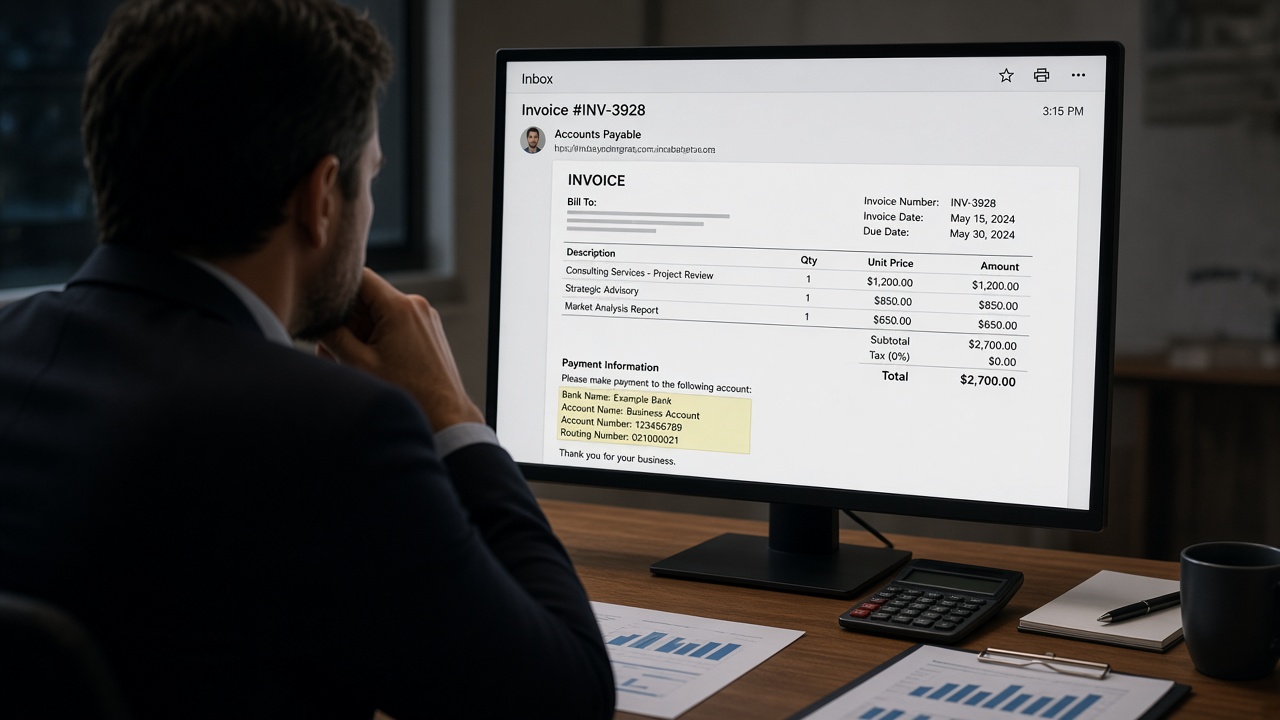
Your customer pays — into a criminal's account
A client receives an email from your address: "Our bank details have changed, please use this account." It looks exactly like your mail, signature and all. They pay. You find out weeks later — and the relationship never fully recovers, because the forged email was possible in the first place.
The free check shows in 30 seconds whether anyone can send email in your company's name — and the full report comes with a step-by-step guide to closing it for good.
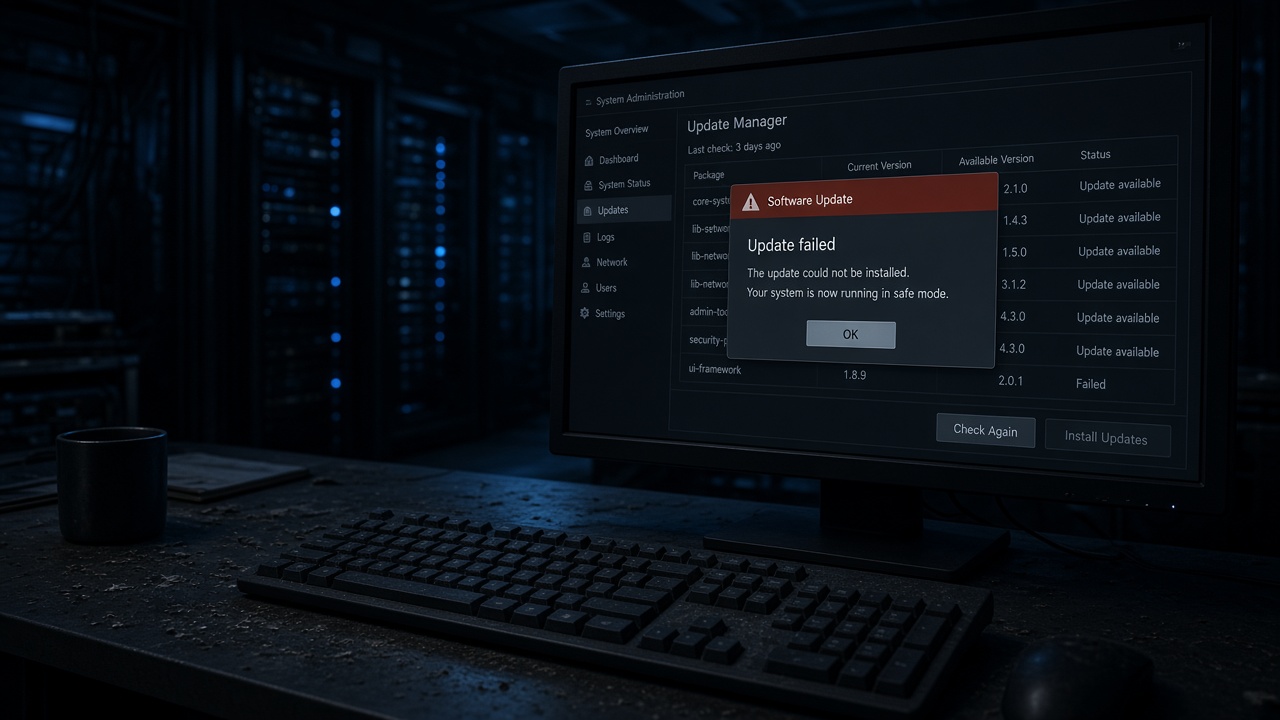
A break-in through software nobody looked at
Your website runs on software that was updated once — when it was built. Criminals don't guess: public databases list exactly which weaknesses your software version has, searchable by anyone. Automated attacks try these lists around the clock, no human involved.
The full report lists what your server reveals about itself and which catalogued weaknesses match it — with a personalized fix guide in plain language: what to update, in what order, step by step.

One morning, every file is locked — and there's a price
Invoices, customer records, years of work — encrypted overnight, with a payment demand on every screen. Ransomware doesn't pick targets; it finds them automatically, almost always through outdated software or a single reused password. Many businesses that pay never get everything back.
The full report shows the two things ransomware needs — software with known weaknesses and exposed ways in — and your personalized guide walks you through closing them, one by one.

A copy of your website, hunting your customers
Someone registers your company name with two letters swapped and puts a copy of your site on it. Your customers get emails "from you" linking to it, type in their details — and blame you. You only hear about it when the angry calls start.
The full report lists every registered lookalike of your domain — and your guide explains, in plain words, exactly what to do about the dangerous ones.

A staff password, already circulating
An employee used their work email on a website that got breached years ago. That password is in criminal collections today — and if it's reused anywhere in your business, attackers simply log in. No alarms, because it's a "correct" login.
The full report shows which of your staff addresses appear in known breaches and what leaked — plus simple steps each affected person can follow to shut the risk down.

One leak + AI = all your accounts, in seconds
This used to take criminals days of manual work. Now AI does it automatically: it takes one leaked password, combines it with public information about you and your company, and tries every variation on your email, banking, cloud and social accounts — thousands of attempts in seconds. One old leak can unravel everything at machine speed.
The full report shows what's already leaked and publicly known about your business — the raw material these tools feed on — and your personalized guide shows you, step by step, how to cut it off.
And some dangers can't be found by any scanner. That's why every full report ends with a personalized guide — no jargon, just plain language and step-by-step instructions written for your situation, covering the scannable and the unscannable alike.
Honest, safe, and zero risk to your website
- We only look — never touch. We read public DNS records, your certificate, and the headers your website already sends to every visitor. No scanning of ports, no intrusion attempts, no login forms touched.
- Real findings. Every result is a genuine, current observation about your domain — the same things an attacker checks first.
- A snapshot, not an audit. This is the surface. The deeper layers — exposed services, breached accounts, cloud configuration — are covered in a full assessment.
- Your details stay with us. We store your domain and email so we can follow up with your full breakdown, and for nothing else.